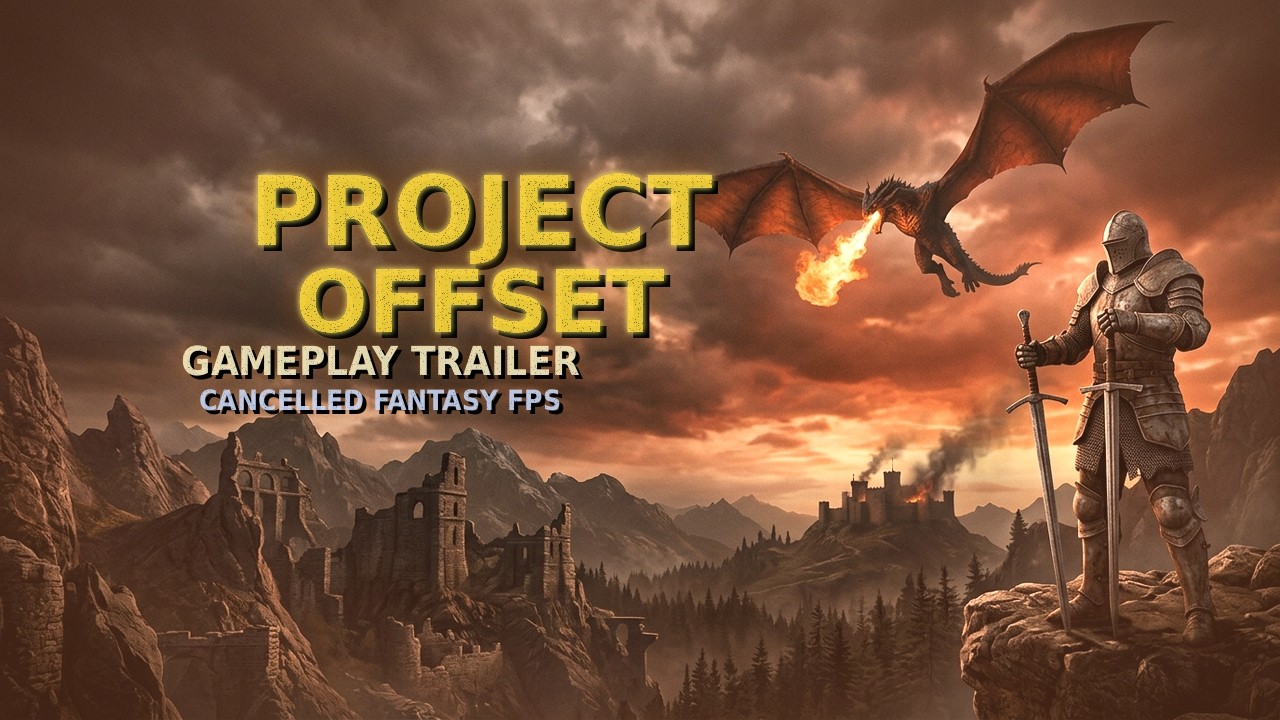
Project Offset. Say that name to anyone who was following PC gaming in the late 2000s and you’ll probably get a wistful sigh. It was one of those tech demo trailers that made jaws drop—stunning real-time lighting, massive battles, and a promise of a multiplayer campaign that felt like something out of a sci-fi novel. The Shacknews article from 2008 (still archived on their site) showed gameplay that looked years ahead of its time. But then… silence. The studio, Offset Software, went dark around 2010, and the game never saw a release.
What made Project Offset so special back then? The trailer showcased a custom engine with deferred shading, dynamic shadows, and huge draw distances—features that wouldn’t become standard until Crysis or later Unreal Engine titles. The leaked trailer (which you can still find on YouTube if you dig) shows a mix of fantasy and sci-fi: orc-like creatures, massive fortresses, and gunfights that felt fluid. There was even talk of a “multiplayer campaign” that blended co-op and competitive modes, an idea that’s only recently gained traction in games like Halo Infinite or Deep Rock Galactic.
Why did it fail?
The short answer: the studio ran out of money and time. Around 2008–2009, the indie scene wasn’t what it is today—no Kickstarter, no Steam Early Access, no easy way to monetize a work-in-progress. Offset Software was relatively small, and their engine was so ambitious that porting to consoles (a necessity for sales) would have required massive investment. Rumors suggest internal disputes and the 2008 financial crisis sealed the deal. By 2011, the domain was dead, and the team scattered to other studios like Bungie and 343 Industries.
What’s the legacy?
Project Offset lives on as a “what if” in gaming history. Its engine eventually inspired some open-source projects, and several of its developers went on to work on AAA franchises. The concept of a multiplayer campaign—where your co-op partner also acts as an antagonist in certain modes—has been explored in games like Left 4 Dead versus mode and The Mean Greens. But the full vision? We never got it.
For those interested in the tech side, the original engine tech demo was showcased at GDC 2007. You can find breakdowns on YouTube from retrospectives like Ahoy or GVMERS. It’s a sobering reminder that even the most promising projects can vanish without a trace—and a testament to how far indie development has come since.
Would Project Offset have been a classic, or just another ambitious failure? We’ll never know. But that trailer still gives me chills.
Topic Summary: A deep dive into Project Offset’s rise, fall, and lasting impact: its groundbreaking tech, the economic factors that killed it, and how its ideas live on in modern games and open-source engines.
 Topic Overview (Wikipedia):
S2 Games was a video game development company which was founded by Marc “Maliken” DeForest, Jesse Hayes, and Sam McGrath, based in Rohnert Park, California. They also had a development location in Kalamazoo, Michigan.
— Read more on Wikipedia
 YouTube Video:
 Official Documentation & Reference Links:
---
title: Project Offset lifecycle phases
---

flowchart TD
    A[Project Offset Rise] --> B[Ambitious Tech Demo: Custom Engine, Deferred Shading]
    B --> C[Hype and Industry Attention: GDC 2007 Showcase]
    C --> D[Financial Challenges: 2008 Crisis, No Kickstarter/EA]
    D --> E[Technical Hurdles: Console Porting, Engine Complexity]
    E --> F[Studio Dissolution: Team Scattered, Project Canceled]
    F --> G[Legacy: Engine Influence, Talent in AAA, Conceptual DNA]
    G --> H[Modern Lessons: Funding, Validation, Middleware Usage]
The Ambitious Vision That Outran Its Time
Project Offset represents a fascinating case study in the intersection of technical ambition and market reality. Its custom engine pushed deferred shading, dynamic GI, and massive draw distances—features that would become standard only years later. What made it particularly remarkable was its attempt to blend fantasy and sci-fi aesthetics with a multiplayer campaign system that dynamically shifted player roles between co-op and competitive modes. That concept, now seen in games like Halo Infinite’s narrative events or The Finals’ team-based asymmetries, was genuinely ahead of the curve.
Why It Collapsed: The Indie Gap
The 2008 financial crisis created a perfect storm. Unlike today’s ecosystem, there were no safety nets: no Kickstarter to raise funds, no Steam Early Access to generate revenue mid-development, no robust middleware to reduce engine-building costs. Offset Software was essentially a small team trying to build a AAA-level title on its own. The custom engine, while stunning, became a liability—porting to consoles (necessary for commercial viability) would have required a complete overhaul of the toolchain. Internal friction and the drying up of venture capital sealed its fate. The story is a stark reminder that technical excellence alone cannot sustain a project without a sustainable business model.
Modern Parallels and Lasting Influence
Today, the indie scene has largely solved the funding and distribution problems, but similar pitfalls persist. Modern ambitious projects like Star Citizen or Core face analogous challenges: scope creep, reliance on custom engines, and the risk of burnout. However, the democratization of game engines (Unreal Engine 5, Unity) and accessible funding (Epic MegaGrants, Patreon) has lowered the barrier. Project Offset’s legacy lives on in several ways:
- Engine fragments: Its renderer techniques influenced open-source projects like Filament and The Forge.
- Talent dispersal: The team scattered to Bungie, 343 Industries, and Rockstar, contributing to Destiny, Halo, and GTA V.
- Conceptual DNA: The asymmetrical co-op/competitive hybrid reappeared in The Mean Greens and Evolve (though with mixed results).
The lesson for today’s developers is clear: validate your core loop early, build middleware-independent pipelines, and secure funding before committing to a custom engine. Project Offset was a dream that flew too close to the sun—but its fragments still illuminate the path forward.
The Unanswered Question
Would it have been a classic? Based on the tech demo’s fluid combat and the multiplayer system’s ingenuity, it likely would have achieved cult status. The real tragedy is not just the cancellation, but the loss of a unique creative vision that could have pushed the industry’s boundaries. In an era where retro-fps revivals are thriving, one can’t help but wish for an alternate timeline where Offset Software survived long enough to ship their magnum opus.