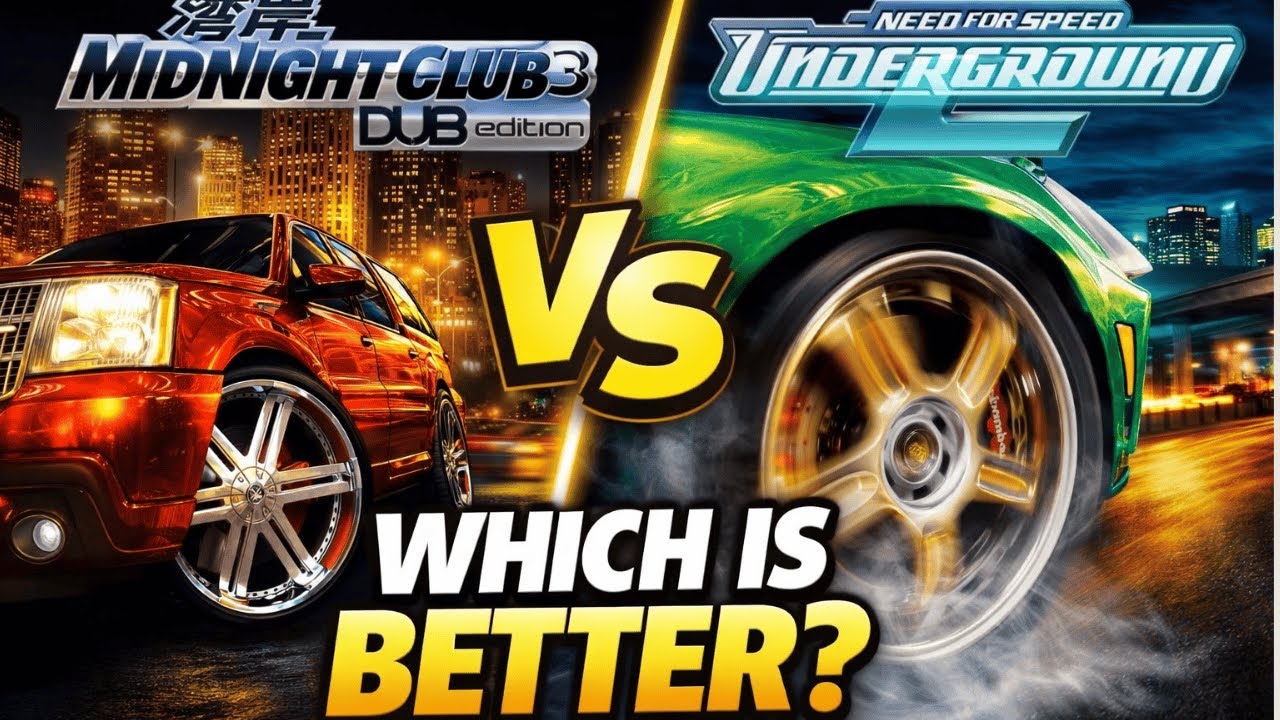
The Midnight Club series still holds a special place for many of us who grew up in the 2000s. Back then, the rivalry between Rockstar’s Midnight Club and EA’s Need for Speed was intense. Midnight Club 3: DUB Edition was a massive step up from its predecessor, offering a massive open world (San Diego and Detroit), deep customization, and that signature Rockstar atmosphere. Meanwhile, NFS Underground 2 had its own strengths—better tuning depth, a more coherent career mode, and a massive modding community that kept it alive for years.
Fast forward to 2026, and both franchises have taken very different paths. Midnight Club died after the poorly received LA (2008), while Need for Speed has been on a rollercoaster—some great entries like Heat (2019) and Unbound (2022), but also missteps like Payback (2017). The arcade racing genre has evolved too. Forza Horizon dominates the open-world scene, and The Crew Motorfest (2023) tries to blend arcade and simcade. But the clunky, illegal street racing vibe with police chases? That’s mostly been abandoned. Some indie games like Night-Runners and Tokyo Xtreme Racer revival (2025) are trying to fill the void.
What do you think? Would a modern Midnight Club game stand a chance, or is the era of the illegal street racer dead? And do you prefer the customization of NFS or the raw feel of Midnight Club?
Topic Summary: Comparing Midnight Club and Need for Speed franchises, discussing their legacies, modern indie alternatives like Night-Runners, modding communities, and the potential for a revival of illegal street racing in AAA gaming.
 Topic Overview (Wikipedia):
Midnight Club 3: Dub Edition is a 2005 racing video game developed by Rockstar San Diego and published by Rockstar Games. It is the third installment in the Midnight Club series. Like previous installments in the series, the game is an arcade-style racer and focuses on wild, high-speed racing, rather than realistic physics and driving. The name is derived from a partnership between Rockstar and DUB Magazine, which features heavily in the game in the form of DUB-sponsored races and DUB-customized vehicles as prizes.
— Read more on Wikipedia
 YouTube Video:
Great topic. Even today, Midnight Club 3 (especially the PS2 version) has a dedicated modding scene. There are texture packs, new cars, even multiplayer servers revived through openspy and XLink Kai. The physics engine in MC3, though arcadey, had a certain weight that NFSU2 lacked. NFSU2’s modding community is arguably bigger—thousands of car models, custom HUDs, and even a full conversion called “Underground 2 Remastered” that tried to bring it to modern PC.
But the biggest what-if: what if Rockstar hadn’t acquired the Midnight Club name? They could have done a third-person GTA-style racer with their resources. Instead, we got the generic “Midnight Club: LA” which tried to copy NFS and lost its identity. Meanwhile, NFS Heat showed that a proper illegal street racing game with police chases and customization can still work. A sequel to Heat was rumored in 2023 but never materialized.
If you want that fix today, check out Night-Runners on Steam. It’s early access but nails the vibe. Or for pure nostalgia, both MC3 and NFSU2 run perfectly on PC with widescreen patches and 60 FPS. The community is still active on Reddit and Discord.
The discussion here really captures why this rivalry still resonates. Both Midnight Club and Need for Speed defined a generation, but the landscape has shifted dramatically. The illegal street racing theme that both series championed has largely disappeared from AAA releases. Forza Horizon dominates by offering a festival atmosphere, while The Crew Motorfest leans into a more curated tourism vibe. Neither captures the grimy, high-stakes police chase tension that made MC3 and NFSU2 memorable.
Why the Genre Faded
Several factors contributed to the decline. First, licensing costs for real cars and music soared, eating into profit margins. Second, publishers became risk-averse—illegal street racing carries negative connotations that could hurt brand image. Third, the rise of open-world games like GTA V and Cyberpunk 2077 absorbed the “drive anywhere, do crime” audience without the racing focus. However, there’s a clear underserved niche: players who want a dedicated, focused street racing experience with deep customization and police chases.
Modern Contenders and Indie Revival
Indie developers are stepping up. Night-Runners (early access) nails the aesthetic and driving feel of the Midnight Club era. The Tokyo Xtreme Racer revival (2025) also targets the same audience. These games succeed because they prioritize atmosphere and gameplay over mass appeal. Interestingly, Need for Speed Unbound tried to bring back street racing with its graffiti art style and improved handling, but it lacked the persistence of law enforcement and the risk-reward tension that defined the genre. Meanwhile, the modding communities for MC3 and NFSU2 continue to thrive, proving these games have long legs.
What a Modern Midnight Club Would Need
If Rockstar ever revived the series, it would need a few key elements: a dense urban environment with dynamic police AI, a progression system that rewards risk (e.g., higher bounties for better parts), and customization that affects performance and visuals. Midnight Club: LA had the right idea with its day/night cycle but failed on physics and map design. A hypothetical MC4 could learn from Heat’s day/night split—legal races during the day, illegal at night—but with a more connected open world and meaningful consequences.
Ultimately, the rivalry lives on through mods and indie tributes. The core audience still exists; it’s just not served by major publishers. I think a well-executed modern entry from either franchise would find a strong niche. The question is whether anyone will take that risk.