Configuring phpMyAdmin and Fixing Directory Index Issues

Setting Up phpMyAdmin Locally

I’ve installed PHP and MySQL on my computer and want to install phpMyAdmin. I have Apache running. I tried to find how to configure it, and the instructions say to create the file config.inc.php in the main (top-level) directory. I don’t know how to create that file. Can someone tell me how to configure that config file? Also, how can I run PHP in safe mode?


I have installed phpMyAdmin somehow now and it seems to work fine, but there’s a little problem: when I type localhost/phpmyadmin/ it opens the page where the directory files are listed, like “Index of /phpmyadmin” with Name, Last modified, Size, Description. But when I type localhost/phpmyadmin/index.php, then it opens the welcome page of phpMyAdmin. My point is that since the index.php file is present in phpMyAdmin, why doesn’t it open the welcome page by typing localhost/phpmyadmin/? Has anyone any idea?

Modern 2026 Trends & Best Practices

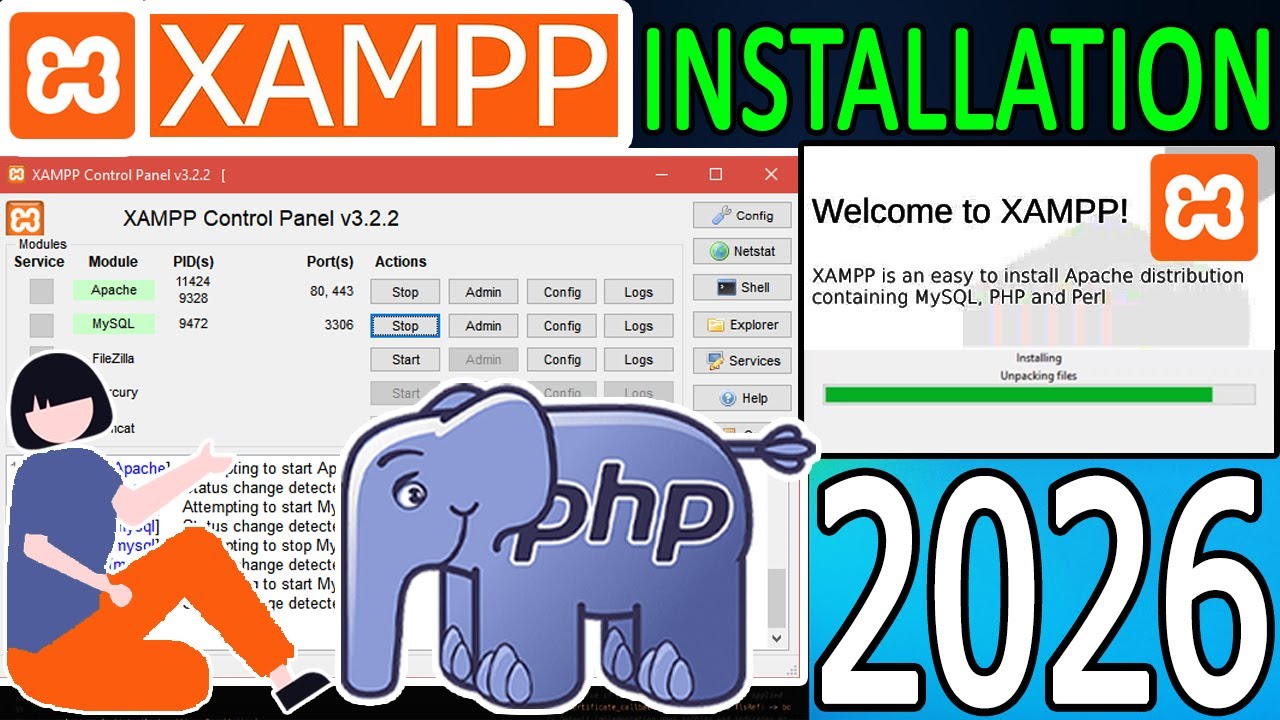
In 2026, the recommended approach for local PHP development is to use integrated environments like XAMPP, WampServer, or Laravel Valet (for macOS). These tools bundle Apache, PHP, MySQL, and phpMyAdmin with minimal configuration. For Windows, WampServer is still popular, but XAMPP offers cross-platform support and includes phpMyAdmin out of the box.

To fix the directory listing issue, you need to ensure Apache’s DirectoryIndex directive includes index.php. In your Apache configuration (httpd.conf or a virtual host file), add:

DirectoryIndex index.php index.html

Then restart Apache. This tells Apache to serve index.php as the default file when a directory is requested.

Regarding safe mode: PHP’s safe mode was removed in PHP 5.4 and is no longer available in modern PHP versions (7.x, 8.x). Instead, use proper security practices like disabling dangerous functions via disable_functions in php.ini, using open_basedir restrictions, and running PHP as a non-privileged user. For local development, safe mode is unnecessary.

If you’re still using an old PHP version, upgrade to PHP 8.x for better performance and security. Modern PHP 8.x offers JIT compilation, named arguments, attributes, and union types.

For a hassle-free setup, download XAMPP from Apache Friends, which includes phpMyAdmin pre-configured. After installation, you can access phpMyAdmin at http://localhost/phpmyadmin/ without any extra configuration.

Topic Summary: Configuring phpMyAdmin and fixing directory index issues by setting Apache’s DirectoryIndex directive, using modern tools like Docker Compose, XAMPP, or WampServer, and understanding PHP safe mode deprecation.

:hammer_and_wrench: Featured GitHub Resource:

:open_book: Topic Overview (Wikipedia):

phpMyAdmin is a free and open source administration tool for MySQL and MariaDB. As a portable web application written primarily in PHP, it has become one of the most popular MySQL administration tools, especially for web hosting services.
Read more on Wikipedia

:movie_camera: YouTube Video:

:books: Official Documentation & Reference Links:

Use WampServer for Simplicity

You can use WampServer software. It has Apache, MySQL, and PHP bundled together. You can download WampServer from http://www.wampserver.com/. Wamp5 has these options:

  1. Apache 1.3.33
  2. PHP 5.0.3
  3. MySQL 4.1.8-nt-log (extension: mysqli)
  4. No config
  5. phpMyAdmin 2.6.0-pl3
  6. SQLiteManager 1.0.4
  7. You can start/stop services
  8. You can edit config
  9. You can make Wamp start at Windows startup
  10. Easy access to sites at localhost/ (no localhost:8080)
  11. Restart services by 1 click
  12. Easy install
  13. Easy access to www directory

However, note that WampServer versions with Apache 1.3 and PHP 5.0 are extremely outdated. In 2026, you should use the latest WampServer (or XAMPP) with Apache 2.4 and PHP 8.x. The current WampServer downloads include modern versions.

To fix your directory index issue: Open the Apache configuration file (httpd.conf) and ensure the line DirectoryIndex index.php is present. If you’re using WampServer, you can edit the config via the system tray icon. Also, check that mod_dir is enabled.

For safe mode: As mentioned, safe mode is gone. Use disable_functions in php.ini to disable dangerous functions like exec, system, passthru, shell_exec, proc_open, etc. For local development, you likely don’t need to disable anything.

Modern 2026 Trends & Best Practices

Today, developers often use Docker for local development environments. With Docker, you can spin up a container with Apache, PHP, MySQL, and phpMyAdmin in seconds using docker-compose. This ensures consistency across team members and avoids “it works on my machine” issues.

Example docker-compose.yml:

version: '3'
services:
  web:
    image: php:8.2-apache
    ports:
      - "80:80"
    volumes:
      - ./www:/var/www/html
  db:
    image: mysql:8.0
    environment:
      MYSQL_ROOT_PASSWORD: root
  phpmyadmin:
    image: phpmyadmin/phpmyadmin
    ports:
      - "8080:80"
    environment:
      PMA_HOST: db

Run docker-compose up and access phpMyAdmin at http://localhost:8080. This is the modern, portable way to set up a LAMP stack.

Modern Approaches to phpMyAdmin Configuration

The discussion highlights a classic problem: getting phpMyAdmin to load automatically when accessing its directory. While the original solutions involved manually editing Apache config files, the landscape has shifted significantly. Today, the most reliable method is using containerized environments like Docker, which eliminate configuration guesswork.

Fixing DirectoryIndex in Apache

If you’re still running Apache directly, the core fix remains ensuring DirectoryIndex includes index.php. In Apache 2.4, this is typically set in httpd.conf or an included config file. You can verify with:

<IfModule dir_module>
    DirectoryIndex index.php index.html
</IfModule>

Also confirm that mod_dir is enabled (it usually is by default). After changes, restart Apache. For WampServer users, the tray icon provides a convenient way to edit the Apache config and restart services.

Why Docker is the Future

Docker Compose offers a declarative, reproducible environment. The example provided in the thread uses separate containers for web, database, and phpMyAdmin. This isolates dependencies and avoids host system conflicts. For production-like setups, you can add custom PHP configurations via Dockerfiles.

Security Considerations

Modern PHP (8.x) has no safe mode. Instead, use disable_functions in php.ini to restrict dangerous functions. For local development, this is often unnecessary, but for shared hosting, it’s critical. Additionally, always use strong MySQL passwords and consider setting up phpMyAdmin with an authentication method like cookie or http.

Summary of Best Practices

  • Use Docker Compose for a portable, consistent LAMP stack.
  • If using native Apache, verify DirectoryIndex and mod_dir.
  • Upgrade to PHP 8.x for performance and security.
  • Avoid manual phpMyAdmin configuration by using bundled tools like XAMPP or Docker images.

The directory index issue is a symptom of incomplete Apache configuration. By adopting modern tooling, you bypass these pitfalls entirely.